In the rapidly evolving landscape of renewable energy, perovskite solar cells have emerged as a promising technology with the potential to revolutionize photovoltaic efficiency. However, their commercial viability has long been hampered by issues related to stability and durability. Recent advancements are now signaling a turning point, as researchers report significant breakthroughs in enhancing the longevity and robustness of these cells. This progress not only underscores the scientific community's relentless pursuit of innovation but also paves the way for perovskite solar cells to compete more effectively with traditional silicon-based technologies.
The allure of perovskite materials lies in their exceptional light-absorption properties and ease of fabrication, which allow for high efficiency at a lower production cost. Yet, their susceptibility to environmental factors such as moisture, heat, and light-induced degradation has been a critical barrier. Early iterations of perovskite solar cells would often deteriorate within days or weeks, making them impractical for long-term applications. Addressing this Achilles' heel has become a focal point of research, driving investigations into material engineering, encapsulation techniques, and interface modifications.
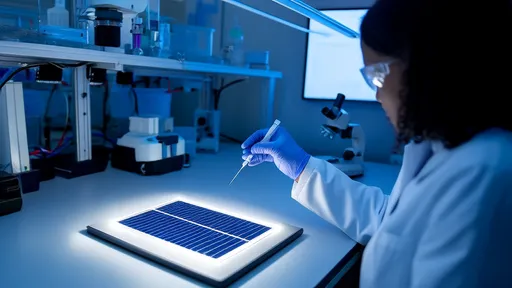
One of the most notable recent developments comes from a collaborative effort between institutions in Europe and Asia, where scientists have engineered a novel hybrid perovskite composition that incorporates formamidinium and cesium ions. This formulation has demonstrated remarkable resistance to thermal and moisture-induced stress, maintaining over 90% of its initial efficiency after 1,000 hours of continuous operation under accelerated aging conditions. Such endurance marks a substantial leap forward, as previous standards struggled to retain efficiency beyond a few hundred hours.
Complementing material innovations, advancements in encapsulation technologies have played a pivotal role in shielding perovskite cells from external degradants. Researchers have developed ultra-barrier films using atomic layer deposition, which create an impermeable seal around the solar cells. These films are not only highly effective in blocking moisture and oxygen but also flexible enough to be applied to various cell architectures without compromising performance. This dual approach—improving both the intrinsic stability of the perovskite layer and its external protection—has proven synergistic, resulting in devices that endure harsh real-world environments.
Another frontier in stability enhancement involves the optimization of charge transport layers and electrodes. Historically, the interfaces within perovskite solar cells have been hotspots for degradation, where ion migration and chemical reactions would initiate failure. By introducing stable, inorganic charge transport materials such as nickel oxide and tin oxide, teams have mitigated these interfacial issues. Moreover, the replacement of conventional silver electrodes with more inert alternatives like gold or carbon-based composites has further reduced susceptibility to corrosion, extending the operational lifespan of the cells.
The implications of these stability breakthroughs extend beyond laboratory metrics. For the first time, perovskite solar cells are approaching the reliability benchmarks set by silicon panels, which typically guarantee 25 years of performance. Field tests in diverse climates—from arid deserts to humid coastal regions—are now underway, with preliminary data showing encouraging results. In one trial conducted in Nevada, USA, prototype perovskite modules retained 88% efficiency after six months of exposure to intense UV radiation and temperature fluctuations, outperforming earlier models by a significant margin.
Industry stakeholders are taking note of these advancements. Major solar energy companies have begun investing in perovskite technology, with some announcing plans to integrate it into next-generation photovoltaic products. This growing commercial interest is accelerating the transition from research to mass production, although challenges related to scaling up manufacturing processes remain. Efforts to develop roll-to-roll printing and other high-throughput techniques are progressing, aiming to make perovskite solar cells not only stable but also economically viable on a global scale.
Looking ahead, the focus is shifting toward multifunctional stability—ensuring that perovskite cells can withstand mechanical stress, such as bending or impact, for applications in building-integrated photovoltaics and wearable electronics. Researchers are exploring self-healing materials and dynamic encapsulation systems that can adapt to environmental changes, further pushing the boundaries of what these cells can achieve. As these innovations mature, the dream of a highly efficient, durable, and low-cost solar energy solution moves closer to reality.
In conclusion, the recent strides in stabilizing perovskite solar cells represent a watershed moment for photovoltaic technology. By tackling the fundamental issues of degradation through multifaceted strategies, scientists have unlocked new potentials for efficiency and longevity. While hurdles persist, the momentum gained from these breakthroughs suggests that perovskite solar cells are poised to become a cornerstone of the renewable energy landscape, offering a brighter and more sustainable future.

By /Aug 25, 2025
By /Aug 25, 2025

By /Aug 25, 2025

By /Aug 25, 2025
By /Aug 25, 2025

By /Aug 25, 2025

By /Aug 25, 2025

By /Aug 25, 2025

By /Aug 25, 2025

By /Aug 25, 2025

By /Aug 25, 2025
By /Aug 25, 2025

By /Aug 25, 2025

By /Aug 25, 2025

By /Aug 25, 2025

By /Aug 25, 2025

By /Aug 25, 2025
By /Aug 25, 2025
By /Aug 25, 2025
By /Aug 25, 2025