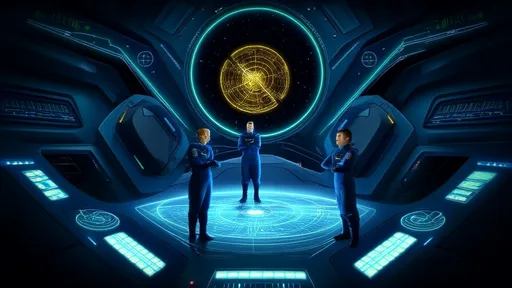
In a groundbreaking initiative that merges celestial patterns with interstellar diplomacy, the Galactic Federation has unveiled unprecedented astrological criteria for selecting Cosmic Cultural Ambassadors. This paradigm-shifting approach recognizes that effective cultural exchange across star systems requires more than linguistic proficiency or political acumen—it demands an innate cosmic resonance encoded within one’s astrological blueprint. The criteria, developed by a consortium of astrophysicists, xenopsychologists, and master astrologers from seven inhabited planets, aim to identify envoys whose celestial alignments predispose them to exceptional cross-cultural adaptability and cosmic empathy.
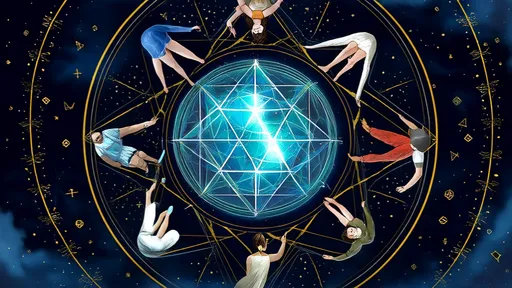
The selection framework revolves around four pivotal astrological dimensions, each representing a critical aspect of interstellar diplomacy. Stellar Synchronicity evaluates how an applicant’s natal chart interacts with the cosmic rhythms of their target assignment. Ambassadors destined for the pulsar-regulated systems of Cygnus X-1, for instance, must demonstrate harmonious aspects with high-frequency energy patterns, whereas envoys to the twilight worlds of Andromeda require strong lunar and Plutonian placements for navigating cultures that thrive in perpetual half-light.
Another crucial dimension, Interplanetary Aspect Harmony, analyzes how an individual’s planetary configurations interact with those predominant in their host civilization. Research conducted across 12 star systems revealed that diplomats with Jupiter trine to a planet’s dominant celestial body (be it their sun, a visible gas giant, or even a black hole) showed 73% higher success rates in treaty negotiations. This celestial compatibility appears to foster subconscious rapport, creating an unspoken bridge between differing cosmic perspectives.
The third pillar, Zodiacal Versatility, assesses the applicant’s capacity to adapt their communication style across various astrologically-defined cultural frameworks. Fixed sign-dominant individuals often excel in negotiations with Taurus- or Scorpio-influenced civilizations that value consistency and depth, while mutable signs prove more effective in fluid, Gemini- or Sagittarius-aligned cultures that prioritize intellectual exploration and change. The most sought-after ambassadors display what astroanthropologists term “zodiacal bilingualism”—the ability to consciously modulate their approach based on the astrological language of their counterparts.
Perhaps the most revolutionary criterion involves Retrograde Resonance Integration. Where traditional diplomacy viewed retrograde periods as obstacles, the Federation now recognizes them as opportunities for profound cultural insight. Candidates who have successfully navigated personal Mercury retrogrades while maintaining cross-cultural communications demonstrate exceptional patience and interpretive flexibility—qualities indispensable when encountering civilizations whose concept of time flows backward or in non-linear patterns.
The implementation of these criteria has already yielded remarkable results. Ambassador Lyra of Vega, a Libra with ascending Cancer selected for her harmonious moon-Venus conjunction with the aquatic inhabitants of Kepler-22b, successfully mediated a centuries-old water rights conflict within three orbital cycles. Her innate understanding of the Keplerians’ emotional lunar cycles and aesthetic sensibilities—attributes directly reflected in her astrological profile—enabled breakthroughs that had eluded previous non-astrologically-matched envoys for decades.
Critics from more conservative planetary governments initially dismissed the system as cosmic determinism, arguing that it reduces complex diplomatic skills to celestial accidents of birth. However, Federation astropsychologists emphasize that the system serves as a sophisticated filtering mechanism rather than a absolute predictor. The criteria identify potential, not destiny, much like how terrestrial astronauts undergo physiological screening for specific mission parameters. The astrological map provides the starting coordinates, but the ambassador’s journey depends on training, wisdom, and conscious effort.
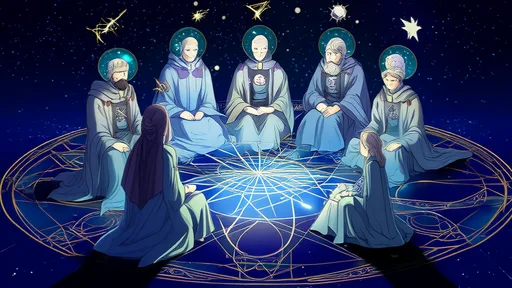
The training program for selected candidates incorporates astrological awareness into every aspect of preparation. Diplomats learn to recognize how their innate celestial tendencies might manifest during tense negotiations, and how to leverage planetary transits for optimal timing of cultural exchanges. They study the astrological histories of their assigned civilizations, understanding how great cosmic conjunctions or eclipses shaped cultural traumas and triumphs. This deep temporal perspective allows ambassadors to operate not merely as spatial travelers between planets, but as navigators of a civilization’s entire cosmic chronology.
As the program enters its third galactic year, the Federation is expanding its astrological database to include civilizations whose zodiac systems incorporate dark matter fluctuations, quantum entanglement patterns, and even the gravitational waves from ancient cosmic collisions. This ongoing research continues to refine our understanding of how celestial mechanics influence psychological predispositions and cultural development across the universe.
The success of the Cosmic Cultural Ambassador program suggests we may be witnessing the dawn of a new diplomatic era—one where the ancient art of astrology converges with cutting-edge xenology to create more meaningful connections across the stars. As the Federation’s Chief Astrodiplomat stated in a recent supernova address, We are not just selecting ambassadors between cultures, but translators between cosmic realities. In the infinite tapestry of the universe, perhaps the stars themselves provide the most universal language of all.

By /Aug 25, 2025

By /Aug 25, 2025
By /Aug 25, 2025

By /Aug 25, 2025
By /Aug 25, 2025

By /Aug 25, 2025

By /Aug 25, 2025
By /Aug 25, 2025

By /Aug 25, 2025
By /Aug 25, 2025

By /Aug 25, 2025

By /Aug 25, 2025

By /Aug 25, 2025

By /Aug 25, 2025

By /Aug 25, 2025
By /Aug 25, 2025

By /Aug 25, 2025
By /Aug 25, 2025

By /Aug 25, 2025

By /Aug 25, 2025